

A Colonial Mind is Not Free

Updated: Nov 22, 2022
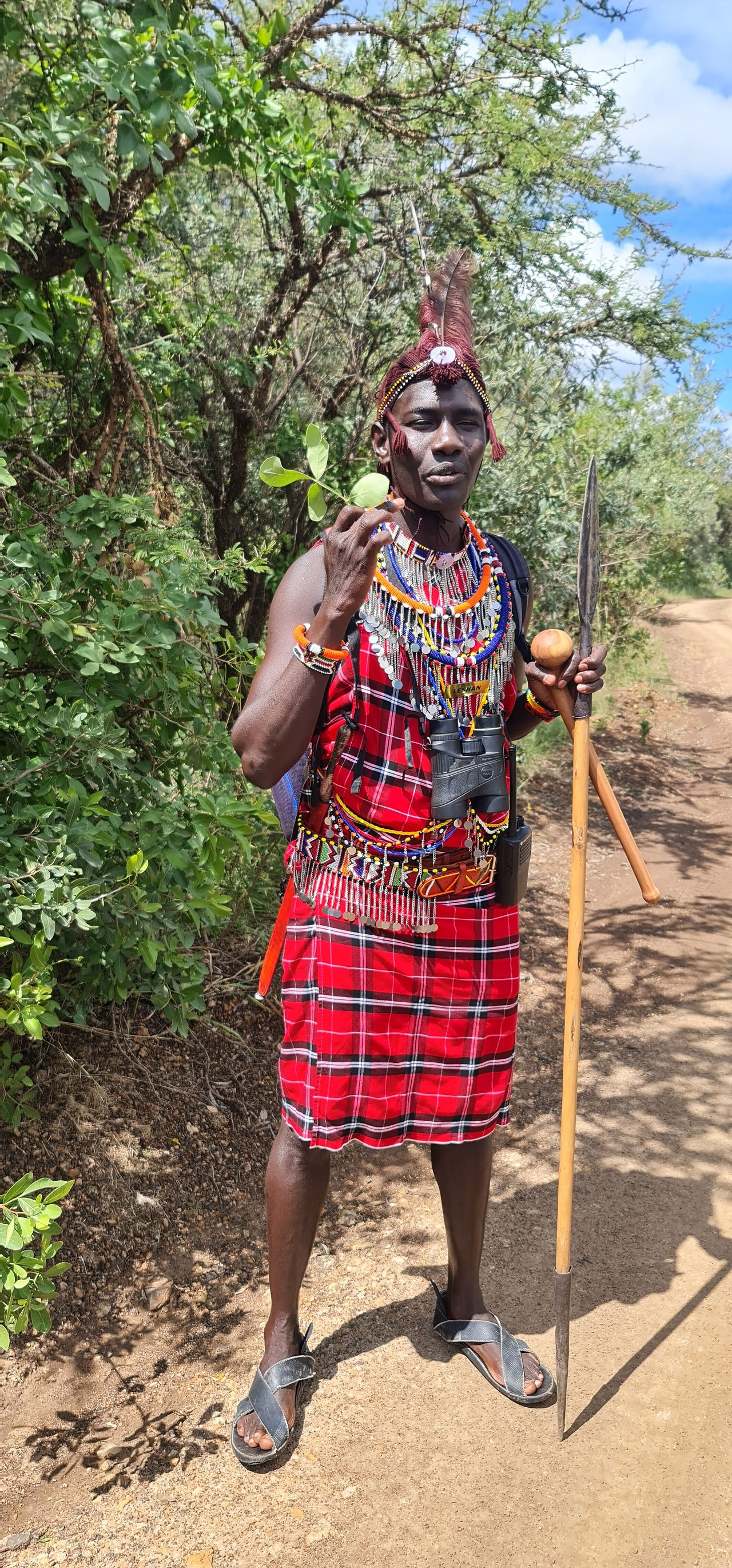
I have always wondered why many African organizations only permit employees to dress traditionally on Fridays and insist that they wear western attire the rest of the week. While suits and ties are accepted and seen as respectable and corporate, our African clothing, which represents hundreds of years of rich culture and artistry, is derided as inferior. Why do we regard the culture of our colonizers as superior, and why do we continue to propagate this? Syed Hussein, a Malaysian sociologist, referred to this as the "captive mind," in which Indigenous people accept and copy Western philosophies without question.
The effects of imperialism and colonialism, which are universal phenomena that have spanned continents and centuries, are still being felt today. Many years ago, the Europeans began the acquisition of empires and colonies in other countries, as well as the Europeanization of the globe. They divided Africa amongst themselves, transporting people and claiming artifacts that had belonged to various African nations for many generations. Colonizers took over indigenous lands in Canada, Australia, New Zealand, and the United States, forcibly assimilating the ancestral occupants into Euro-western culture.
The justification for colonization was that European states had succumbed to the deceptive notion that national strength is dependent on creating and maintaining a homogeneous national identity and spreading that homogeneous identity throughout the world. It is a fallacy and a mistake to try to condense the rich diversity of the world into a single, Euro-western image.
The major error of sameness or universalism is that it can only succeed through massive domination and silencing of the weaker groups. It throws social justice to the wind and creates a knowledge dichotomy. This positional superiority of the West disadvantages the countries of the other worlds, and this system benefits the colonizer because achieving this rank necessitates the dehumanization and undermining of the social traditions of the Other.
This universalism ideology spreads in various ways. The colonizer language, for example, is officially spoken and propagated in schools, whereas the traditional language of Indigenous communities is referred to as vernacular. The same is true of higher education, whose principles and content are based on western philosophies and favor western values and thought patterns. The types of music or tunes that are popular today reflect the colonial mind's influence, as does the implicit prestige associated with being European. Even in the field of social science, Western methodologies, philosophies, and modes of knowing are acknowledged as universal and mainstream, while the epistemologies of formerly colonized peoples are seen as exceptions. Unsurprisingly, Western concepts underpin much scholarly thought.
This is factually incorrect; rather than being seen as universal, Western philosophies should be seen as particular—one of many other ways of knowing. Dismissing the perceived realities of historically oppressed or formerly colonized groups and undervaluing their knowledge is unfortunately the price that third-world countries pay, as knowledge has become a power struggle and an important profit-making mechanism in the global capitalist economy. To convince themselves and their colonizers of their value, Indigenous peoples have admittedly accepted these post-colonial effects even though they were not directly imposed by the exploitative other. The Other is unimaginative and unable to pose novel issues because they have been conditioned to believe that all valid knowledge originates in the West.
This article is neither political nor intended to place blame. Its purpose is to highlight the issues facing Indigenous communities and encourage Indigenous peoples to reclaim their power and place in society. There is an urgent need to decolonize and indigenize many of our institutional systems. Although western systematic knowledge and traditions have great universal value, it is risky to adopt as universal those aspects of western thought that appear dominant but are, in fact, situationally specific.
There is growing evidence of the failures of research-driven interventions based on mainstream research epistemologies (Chilisa, 2011). Third-world nations will not advance much by copying and mimicking the West. Indeed, centuries of oppression can make our oppressor's dominant ways of civilization appear natural or normative rather than historically evolved social constructions. We must forge our own path and begin to construct our own knowledge from the wisdom and knowledge passed down through generations.
Again, all systems, including our higher education institutions, political structures, and research methodologies, must be decolonized. Afrobeat, a West African music genre that blends traditional West African musical styles with American influences, has thankfully evolved into one of the most eclectic and exportable sounds in contemporary music in the world. Without a doubt, Indigenous knowledge must be used as a source of knowledge to challenge stereotypes of postcolonial societies.
To reiterate, attempting to see the world solely through the lens of the West or to order the entire world according to Western standards of culture, politics, and economic structures is a universalism error. The world's diversity is beautiful and should be celebrated. Every culture, understanding, and awareness of the world is valuable and equally important. Indigenous communities, particularly Africans, must become aware of this colonial and captive mind and begin to challenge it. We are not empty vessels waiting to be filled, nor do we expect the West to come and save us.
Consider the economic advantages of promoting African traditional clothing in workplaces as opposed to importing what we perceive to be high-quality clothing from other countries. Think about the advantages for the textiles industry. We've had our independence for years, but we won't be truly free until we start thinking for ourselves. This is a call to action for all formerly colonized nations to challenge and question stereotypes, and to promote the production and validation of indigenous knowledge and culture.
Which of the following institutions is the most in need of decolonization?
0%Education
0%Politics
0%Healthcare
0%Economic control
A Representation of the World's Rich Diversity

South Africa


Pictures source: pexels.com


Comments